

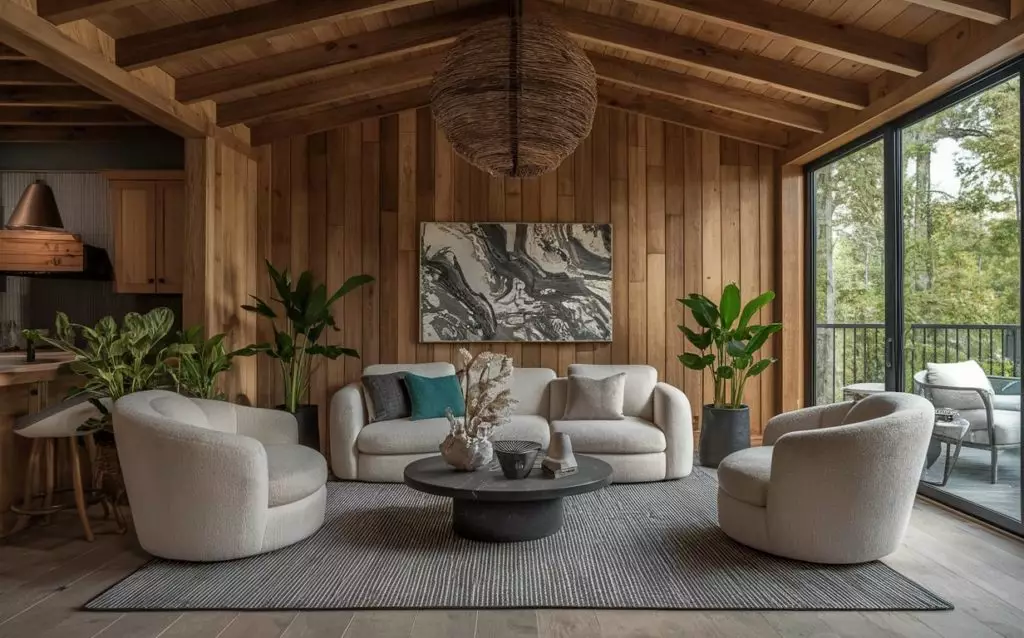

Using underrated materials of 2024 in sustainable design is all the rage right now. Although there’s a misconception that using sustainable products for building and designing spaces is only for the affluent, you can certainly design completely sustainable homes for clients with any budget using the latest interior design innovations and home design software.
The best part is, that these underrated design materials are completely sustainable. Although the initial investment may be high for some of these underrated materials, given the limited number of vendors and price points there are for them, they continue to rake in benefits for a long time, in terms of reduced power bills, improved wellness, energy efficiency, being part of a circular economy and so on.
Regardless of whether your client lives in a small space, or studio apartment in New York, or a lavish mansion in the French countryside, you can use these materials as part of home decor.
In this blog, you’ll discover the 5 most underrated and underutilized, unique interior design materials, for you to figure out which natural materials can be introduced to make your clients’ homes timeless yet with a touch of the latest interior design trends.
Best Underrated Design Materials of 2024
1. Cork
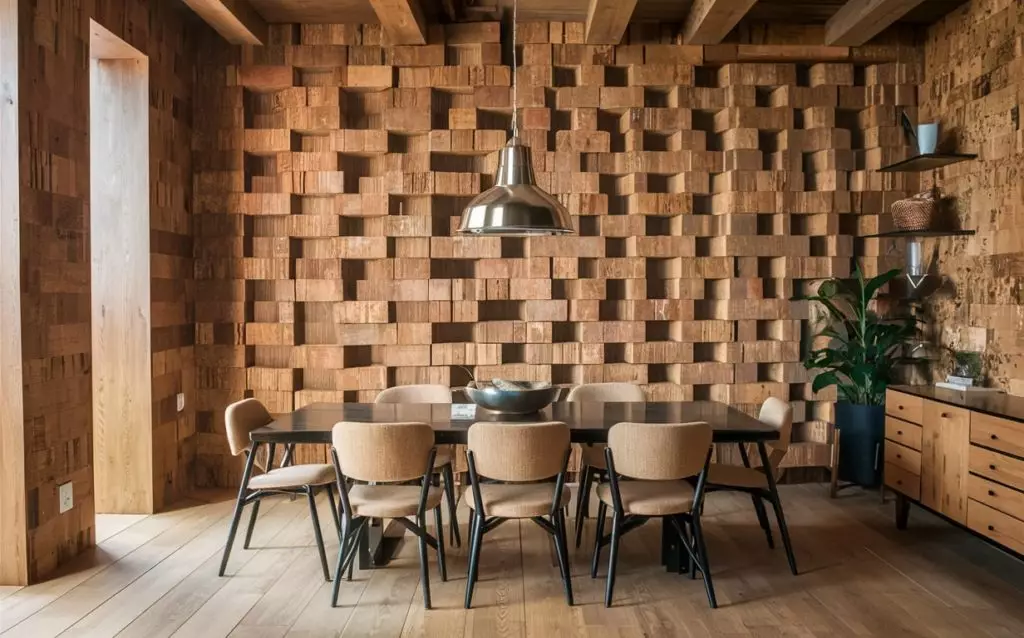
Cork was formerly only used as wine stoppers and bulletin boards, but thanks to fearless designers like you, the material has been experimented with in different settings and is now used extensively across different indoor and outdoor decor.
It’s lightweight, low-cost, and ensures sustainability, and one of the most versatile building materials in vogue right now. It’s eye-catching, has natural insulation properties, and can offer long-term protection from the elements.
Cork is extremely sustainable because no trees need to be cut for cork to be harvested. Cork trees live up to 300 years, so there’s practically unlimited supply when used properly.
When it comes to home decor, you can use cork in the following ways:
- Interconnecting blocks to serve as bricks (blends in well with the environment)
- Roof tiles (easily assembled)
- External walls
- Accent walls
- Living room dividers
- Flooring
- Furniture (coffee table, dining table)
- Lampshades, and aesthetic decor
- Kitchen backsplashes
| Pros | Cons |
|---|---|
| ✅ Great acoustic dampening, so amazing to use in home theatres | ❌ Need to reseal every 2 years |
| ✅ Super easy to install | ❌ Prolonged water exposure can make the cork vulnerable to mold |
| ✅ Exudes a pleasant, earthy smell if used indoors | ❌ Needs regular cleaning |
| ✅ Can be paired with any design style |
2. Bamboo
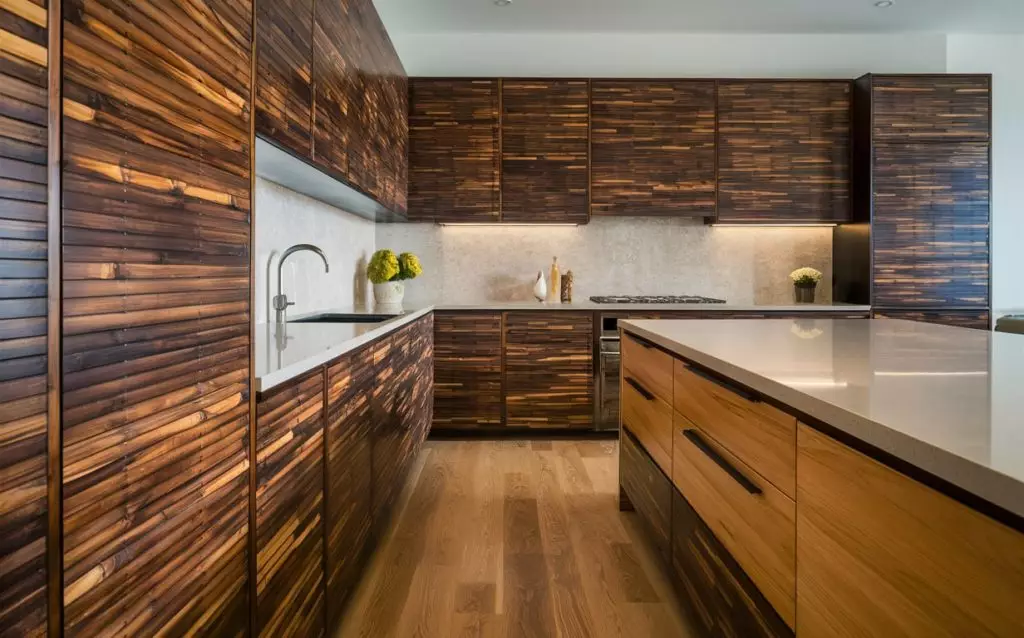
Bamboo is the fastest-growing plant in the world, and you may be surprised to know it equals the tensile strength of steel and the compressive strength of brick and concrete. Even in a storm, bamboo only bends but doesn’t break. It works well with other material systems as well, making it an excellent choice for kitchen design software integrations.
Bamboo can be used in home decor in the following ways:
- Kitchen cabinets
- Flooring
- Furniture
- Cutting boards
- Garden shades
- Dining room dividers
| Pros | Cons |
|---|---|
| ✅ Helps in reforestation | ❌ Every piece of bamboo has a different dimension, so may not work as a building material |
| ✅Helps reduce carbon emission, and absorbs carbon in the atmosphere | ❌ Problems can arise when it comes to grading the material |
| ✅ Super high bendability | ❌ Difficulty using conventional joinery with bamboo |
| ✅ Great shock absorber | ❌ May not absorb water as much |
3. Reclaimed Wood
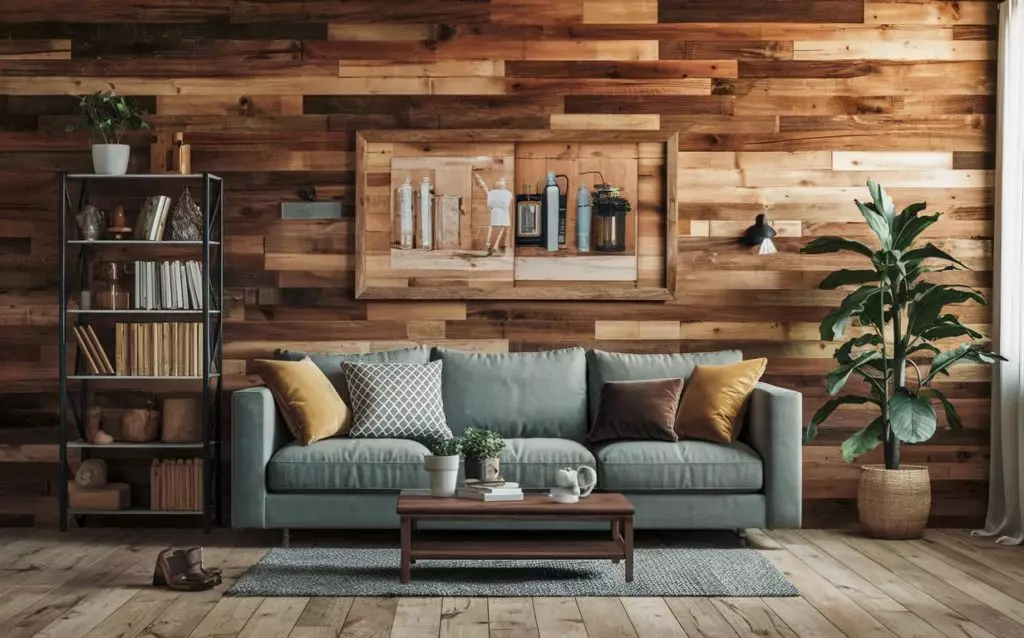
Reclaimed wood is old, pre-used wood that has been weathered, and has beautiful colors – earthy and pastel (if painted), and grains with an extraordinarily rich patina. You can source reclaimed wood from a local shop if you want to reduce acquisition costs.
You contribute to reducing deforestation by choosing reclaimed wood. It has the same, and sometimes even better aesthetics than freshly sourced hardwood, but for a tenth of the cost.
It helps keep wood out of landfills and is put to good use. It can quickly be customized – cut, stained, and finished to fit specific home design requirements using a floor plan creator. Reclaimed wood adds character to your home, piques visual interest, and looks antique. When compared to newly sourced wood, reclaimed wood emits fewer toxins, even if it off-gasses.
Reclaimed wood can be used in home decor in the following ways:
- Flooring
- Accent walls
- Coffee tables
- Kitchen islands
- Custom bedroom furniture – bedside tables, chest of drawers
- Dining table top
- Outdoor furniture – daybed, ottomans
- Old wooden coffee table with a glass top
| Pros | Cons |
|---|---|
| ✅ Needs less energy to process | ❌ Water, heat, and humidity intolerance |
| ✅ Easy to install and customize | ❌ Can be difficult to source in large quantities |
| ✅ Denser and more durable in nature | ❌ Preparation time is long, to prevent safety issues |
| ✅ Improves home’s resale value | ❌ Needs constant maintenance |
4. Mycelium
Mycelium is the root of mushrooms. It’s delicate, but very durable. Works as an excellent alternative to plastic. Given that the annual production of plastics has crossed over 300 Million tonnes of which less than 10% is recycled.
Mycelium is a great way to reduce plastic damage to the environment while ensuring the same functionality. It’s usually mixed with wood chips, oak hulls, cotton burrs, and hemp hurds to improve their strength. Insulation panels made from mycelium outperform traditional insulation in terms of thermal capacity, fire resistance, and acoustic performance.
Mycelium can be used as part of home decor in the following ways:
- Mushroom bricks
- Wall panels
- Seating
- Insulation panel
- Planters
- Bricks
- Tiles
| Pros | Cons |
|---|---|
| ✅ High resistance to fire and water | ❌ May not be extremely durable |
| ✅ Great acoustic performance | ❌ Prolonged exposure to water can result in mold formation |
| ✅ 100% compostable, non-toxic | ❌ May not be very strong |
5. Leftover Bricks
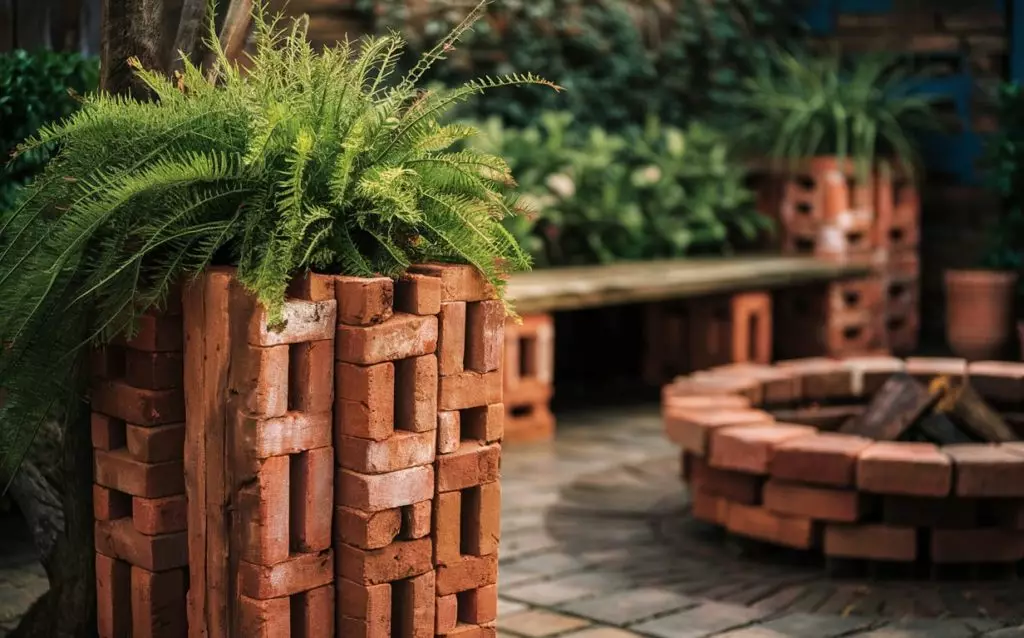
Used bricks are super-strong, and have high longevity. They can withstand extensive wear and tear and can absorb, store, and release heat. They come in a variety of colors and can be customized too. They reduce noise transmission and improve sound insulation. They are also naturally fire-resistant.
Leftover bricks can be used in home decor in the following ways:
- Planters (makes for a great DIY hack)
- Garden benches
- Fire pit in the backyard
- Brick waterfall
- Steeping stone pathway for backyard flooring
- Custom brick display with engraving or stencils
| Pros | Cons |
|---|---|
| ✅ Totally recyclable | ❌ Heavy, so difficult to move around during installation |
| ✅ Have a rustic charm | ❌ Matching bricks can be difficult to find |
| ✅ Affordable yet gives a high-end look | ❌ Absorbs moisture too much |
| ✅ Easy to maintain |
